
It’s a common fact of human nature that the builders who construct the code shouldn’t be those to check it. To begin with, most of them just about detest that process. Second, like all good auditing protocol, those that do the work shouldn’t be those who confirm it.
Not surprisingly, then, code testing in all its kinds – usability, language- or task-specific exams, end-to-end testing – has been a spotlight of a rising cadre of generative AI startups. Each week, TechCrunch covers one other one like Antithesis (raised $47 million); CodiumAI (raised $11 million) QA Wolf (raised $20 million). And new ones are rising on a regular basis, like new Y Combinator graduate Momentic.
One other is year-old startup Nova AI, an Uncommon Academy accelerator grad that’s raised a $1 million pre-seed spherical. It’s making an attempt to finest its opponents with its end-to-end testing instruments by breaking lots of the Silicon Valley guidelines of how startups ought to function, founder CEO Zach Smith tells TechCrunch.
Whereas the usual Y Combinator method is to start out small, Nova AI is aiming at mid-size to massive enterprises with complicated code-bases and a burning want now. Smith declined to call any clients utilizing or testing its product besides to explain them as principally late-stage (collection C or past) venture-backed startups in ecommerce, fintech or client merchandise, and “heavy consumer experiences. Downtime for these options is expensive.”
Nova AI’s tech sifts by its clients’ code to routinely construct exams routinely utilizing GenAI. It’s significantly geared towards steady integration and steady supply/deployment (CI/CD) environments the place engineers are consistently delivery bits and items into their manufacturing code.
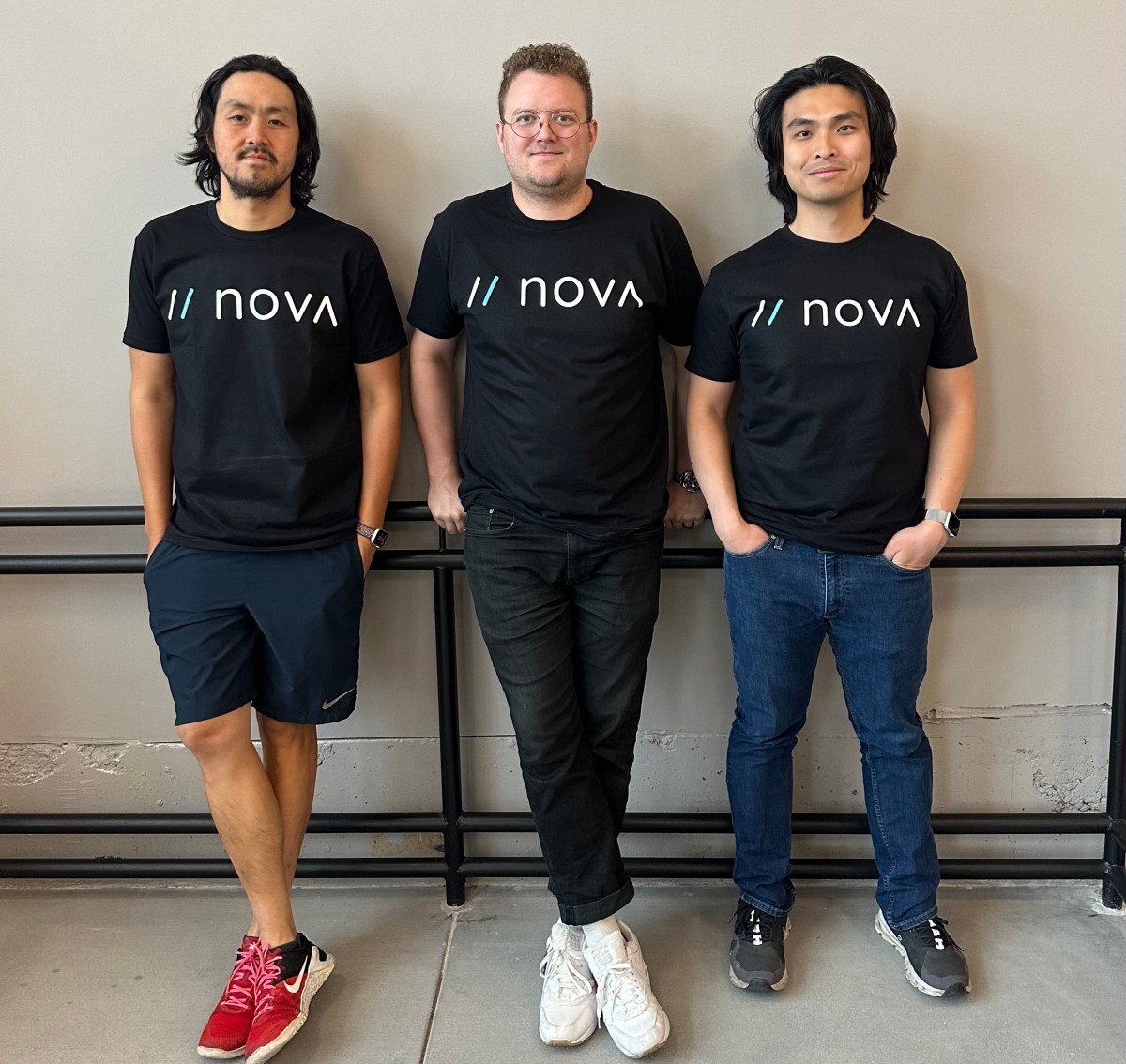
The thought for Nova AI got here from the experiences Smith and his cofounder Jeffrey Shih had once they had been engineers working for giant tech firms. Smith is a former Googler who labored on cloud-related groups that helped clients use loads of automation know-how. Shih had beforehand labored at Meta (additionally at Unity and Microsoft earlier than that) with a uncommon AI speciality involving artificial information. They’ve since added a 3rd cofounder, AI information scientist Henry Li.
One other rule Nova AI is just not following: whereas boatloads of AI startups are constructing on high of OpenAI’s trade main GPT, Nova AI is utilizing OpenAI’s Chat GPT-4 as little as potential, solely to assist it generate some code and to do some labeling duties. No buyer information is being fed to OpenAI.
Whereas OpenAI guarantees that the data of those on a paid business plan is just not getting used to coach its fashions, enterprises nonetheless don’t belief OpenAI, Smith tells us. “Once we’re speaking to massive enterprises, they’re like, ‘We don’t need our information going into OpenAI,” Smith mentioned.
The engineering groups of huge firms usually are not the one ones that really feel this manner. OpenAI is fending off a number of lawsuits from those that don’t need it to make use of their work for mannequin coaching, or consider their work wound up, unauthorized and unpaid for, in its outputs.
Nova AI is as a substitute closely counting on open supply fashions like Llama developed by Meta and StarCoder (from the BigCoder group, which was developed by ServiceNow and Hugging Face), in addition to constructing its personal fashions. They aren’t but utilizing Google’s Gemma with clients, however have examined it and “seen good outcomes,” Smith says.
For example, he explains {that a} widespread use for OpenAI GPT4 is to “produce vector embeddings” on information so LLM fashions can use the vectors for semantic search. Vector embeddings translate chunks of textual content into numbers so the LLM can carry out varied operations, reminiscent of cluster them with different chunks of comparable textual content. Nova AI is utilizing OpenAI’s GPT4 for this on the shopper’s supply code, however goes to lengths to not ship any information into OpenAI.
“On this case, as a substitute of utilizing OpenAI’s embedding fashions, we deploy our personal open-source embedding fashions in order that when we have to run by each file, we aren’t simply sending it to OpenAi,” Smith defined.
Whereas not sending buyer information to OpenAI appeases nervous enterprises, open supply AI fashions are additionally cheaper and greater than adequate for doing focused particular duties, Smith has discovered. On this case, they work nicely for writing exams.
“The open LLM trade is de facto proving that they’ll beat GPT 4 and these huge area suppliers, while you go actually slender,” he mentioned. “We don’t have to supply some huge mannequin that may inform you what your grandma needs for her birthday. Proper? We have to write a take a look at. And that’s it. So our fashions are fine-tuned particularly for that.”
Open supply fashions are additionally progressing rapidly. For example, Meta lately launched a new version of Llama that’s earning accolades in know-how circles and which will persuade extra AI startups to have a look at OpenAI options.
Trending Merchandise







![Rustic Grey Mason Jar Sconces for Home Decor, Decorative Chic Hanging Wall Decor Mason Jars with LED Strip Lights, 6-Hour Timer, Silk Hydrangea, & Iron Hooks for Home & Kitchen Decorations [Set of 2]](https://m.media-amazon.com/images/I/41DPf4UgGOL._SS300_.jpg)
