
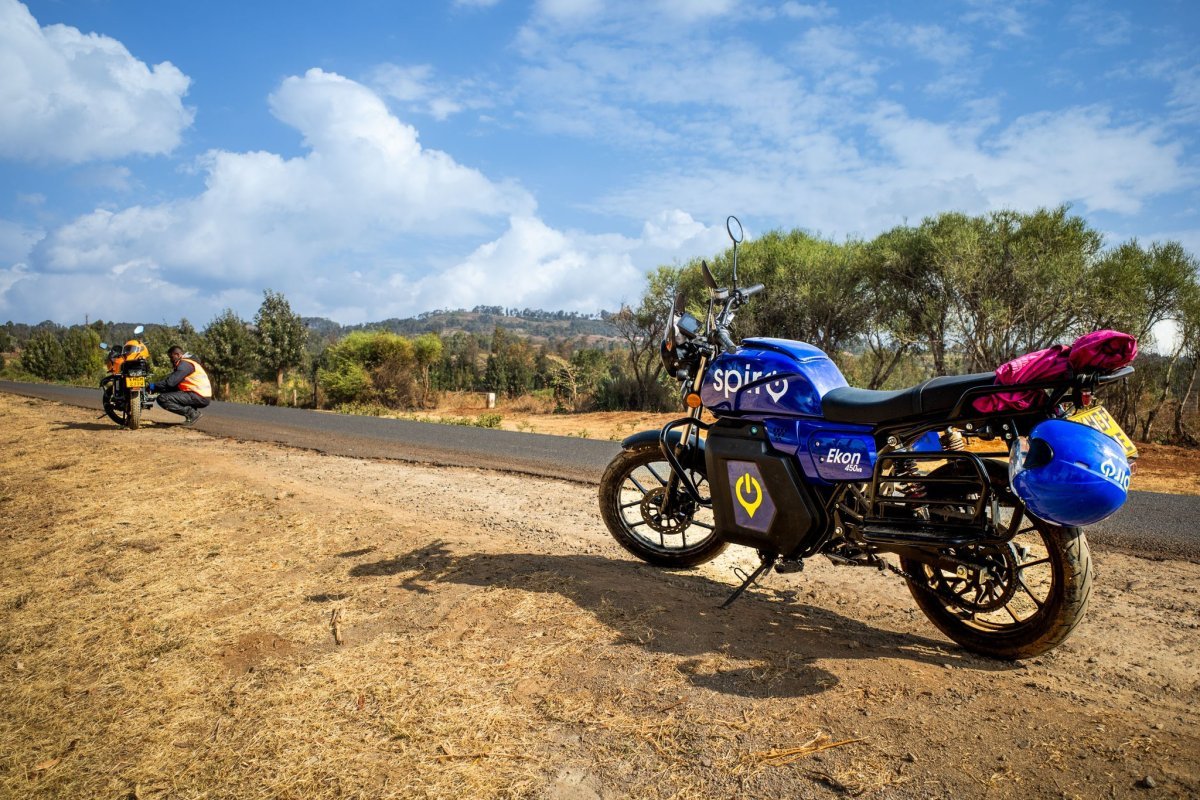
Africa’s electrical mobility story has typically been one in all promise over progress. Infrastructure is scarce, energy grids are unreliable, and most markets nonetheless run on low-cost imported bikes. However Dubai-headquartered Spiro has spent the previous two years attempting to rewrite that narrative.
The corporate simply introduced a $100 million funding spherical led by The Fund for Export Improvement in Africa (FEDA), the event arm of Afreximbank. The elevate marks Africa’s largest-ever EV mobility funding and cements Spiro because the continent’s most aggressive electrical bike firm.
Spiro says it plans to deploy greater than 100,000 electrical bikes throughout Africa by the tip of 2025, a 400% year-over-year soar that underscores its ambition to dominate a class lengthy thought of too fragmented to scale.
Spiro’s progress has been dizzying. When CEO Kaushik Burman joined two years in the past from Taiwanese battery-swapping large Gogoro, the startup had simply 8,000 electrical bikes and 150 swap stations unfold between neighboring nations Benin and Togo.
In the present day, it operates in six nations—together with Rwanda, Kenya, Nigeria, and Uganda—with over 60,000 bikes deployed and 1,500 swap stations, the place riders can swap depleted batteries for freshly charged ones. Battery swaps have surged from 4 million in 2022 to over 27 million this yr, Burman informed TechCrunch.
The key behind that progress, Burman says, is a enterprise mannequin constructed for Africa’s realities.
In African cities, motorbike taxis—often known as boda bodas in Kenya or okadas in Nigeria—transfer individuals and items by congested cities and rural cities alike. But for the tens of millions of riders who depend on them, gasoline prices are punishing.
Techcrunch occasion
San Francisco
|
October 27-29, 2025
“These drivers spend 10 to 12 hours on the street day-after-day, masking 150 to 200 kilometers whereas paying excessive gasoline prices. On the finish of every day, most barely save something,” Burman stated. “That’s why electrical mobility, particularly by a battery-swapping mannequin, suits this phase completely. They will’t afford downtime and get to avoid wasting cash.”
That’s the wedge Spiro is leaning into. In line with Burman, its electrical bikes price roughly 40% much less upfront than new gasoline fashions. In Kenya or Rwanda, the place a typical gasoline bike sells for $1,300–$1,500, Spiro’s e-bikes price round $800 and prices about 30% much less per kilometer, since swapping batteries is cheaper than refueling, he says.
This mixture of decrease price and quicker payback has made Spiro’s mannequin engaging for taxi drivers. Burman claims most riders — who pay a day by day payment for entry to its vitality community — save as much as $3 per day on gasoline and upkeep. “That’s sufficient to purchase one other bike or begin a small enterprise over time,” the CEO remarked.
Spiro earns income from each bike gross sales and its battery-swapping community. Riders purchase or lease a Spiro bike, choose up a charged battery at a swap station, and pay just for the vitality they eat. Every swap station homes dozens of batteries which might be recharged repeatedly, making certain zero downtime. Riders are billed by way of a proprietary algorithm that measures vitality utilization.
The community itself is Spiro’s revenue engine: by proudly owning the battery infrastructure and charging a small payment per swap, the corporate shortly achieves economies of scale. “Along with battery swapping, we’re additionally utilizing renewables and vitality storage to make sure our community stays operational even throughout blackouts,” Burman stated.
Spiro’s swap stations are positioned in gasoline stations, buying facilities, and even non secular establishments, a community constructed by partnerships that additionally creates native jobs.
To satisfy rising demand and improve employment alternatives, the three-year-old startup has established 4 meeting and manufacturing services throughout Kenya, Nigeria, Rwanda, and Uganda. These vegetation assemble bikes and key elements corresponding to traction motors, controllers, and batteries.
Spiro already assembles batteries in Kenya utilizing its proprietary battery administration system (BMS) and plans to spice up native sourcing from 30% at the moment to 70% inside two years, together with plastics, helmets, and brake elements, in response to Burman.
The $100 million spherical — together with $75 million from FEDA and the remaining from different strategic buyers — will assist fund this growth. It follows greater than $180 million in earlier investments, a mixture of debt and fairness from the Equitane Group (Spiro’s dad or mum firm) and Société Générale.
The brand new capital will go towards increasing Spiro’s swap community, manufacturing capability, and R&D, in addition to launching pilots in new markets like Cameroon and Tanzania.
Because it scales, Spiro should face rising competitors from different EV startups like Ampersand, ROAM, Max, or BasiGo. However Burman argues in any other case.
“Our competitors is the gasoline bike phase, each first and the secondhand bike phase and the tens of millions of potential riders who don’t but personal a motorcycle or lack entry to inexpensive transportation and employment.”
Africa has round 25 million motorbikes, in contrast with 320 million in India, regardless of related inhabitants sizes. That 13x hole, he stated, exhibits the dimensions of the chance forward.
Trending Merchandise






![Rustic Grey Mason Jar Sconces for Home Decor, Decorative Chic Hanging Wall Decor Mason Jars with LED Strip Lights, 6-Hour Timer, Silk Hydrangea, & Iron Hooks for Home & Kitchen Decorations [Set of 2]](https://m.media-amazon.com/images/I/41DPf4UgGOL._SS300_.jpg)
