
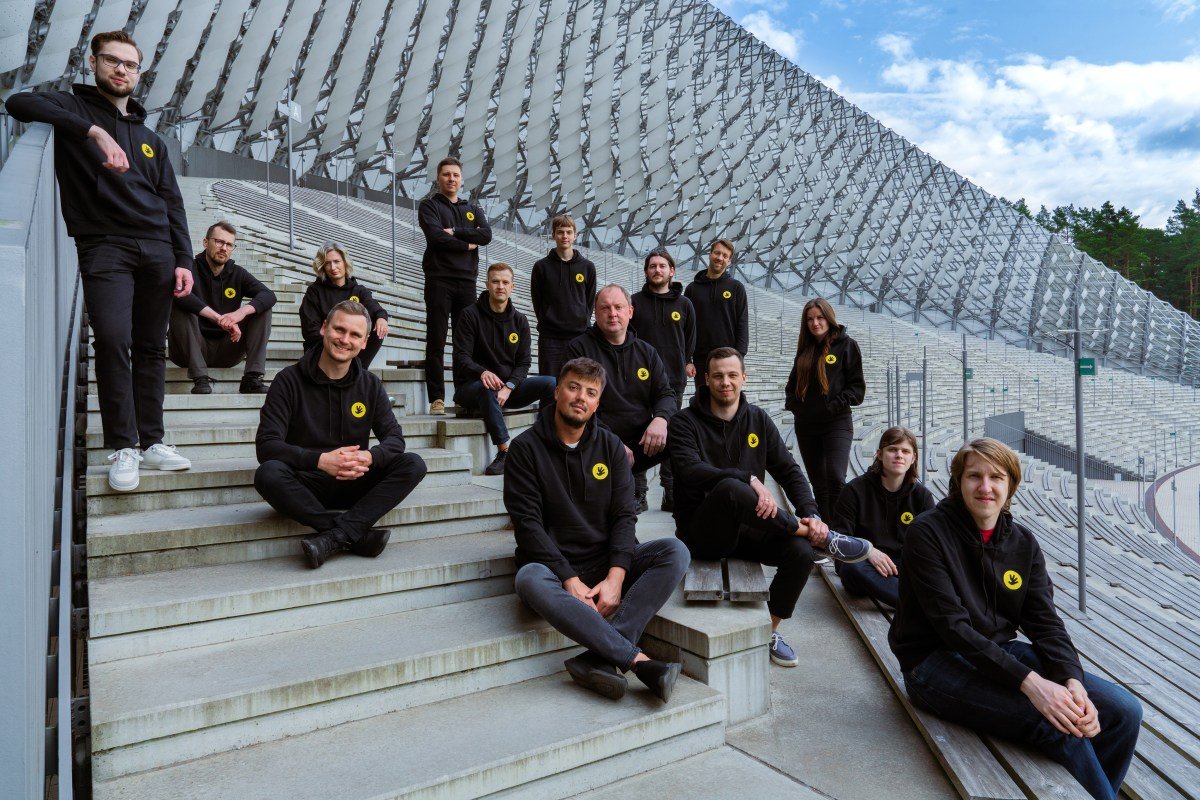
Paying with a handwave as soon as appeared like science fiction, however contactless palm recognition service Amazon One has already been used more than 8 million times, in accordance with the corporate. That’s Amazon, although, which explains why it has been deployed in Amazon shops and greater than 500 Complete Meals Market shops within the U.S., however solely 150 third-party places.
In the meantime, fintech startups like Latvia’s Handwave are stepping onto the sector, aiming to offer third-party retailers with an identical however unbiased resolution for sooner checkout whereas leveraging the large’s position in popularizing biometric funds within the West. (China has already begun adopting biometric palm funds, with Tencent working to bring its Weixin Palm Pay service into mainstream use.)
Like Apple’s Face ID, palm scanning makes use of greater than static photographs: it analyzes palm vein patterns and in addition verifies that the consumer is bodily current once they hover their hand over the scanner. This methodology works for safe contactless funds and in addition applies to broader id verification situations — with gamers like Keyo additionally supporting secure building access and other applications.
In distinction, Handwave is focusing particularly on retail — and because it doesn’t personal shops like Amazon, it needed to search companions, which required having a product. Three years in, and now with its personal {hardware} and software program, the Latvian startup is making ready for market pilots that can deploy its palm scanning units at retail shops.
Retailers who deploy the startup’s tech would pay a transaction charge that Handwave claims might be on par with or decrease than customary funds. In keeping with Handwave, sooner and cheaper checkouts might cut back prices. However in contrast to some cost-cutting measures, this resolution goals to make issues simpler for patrons — with the promise of no playing cards, no apps, no fingerprint scanners, and no facial scans — even for age verification and loyalty packages.
Handwave’s cofounders, CEO Janis Stirna and Sandis Osmanis-Usmanis, beforehand labored for one of many world’s largest international fee suppliers, Worldline. Regardless of this connection, the crew goals to construct a large ecosystem. “Our plan is to collaborate with any monetary establishment or buying financial institution,” Stirna instructed TechCrunch.
The startup has solely partnered with a handful of economic establishments thus far, “however very massive ones, particularly in Europe,” Stirna mentioned. This summer time, the startup signed an settlement with Visa that might velocity up the deployment of Handwave’s resolution in any nation, in accordance with its chief income officer, Oskars Laksevics.
Techcrunch occasion
San Francisco
|
October 27-29, 2025
Whereas Handwave has its eyes on the U.S. market as effectively, Laksevics believes that it may be a bonus to begin out within the European Union — “the strictest market on the earth” — and show compliance there earlier than increasing.
Being an unbiased European participant might additionally assist the startup hold an edge if or when Amazon decides to extra aggressively provide Amazon One to 3rd events; or if JP Morgan rolls out its own palm payment experiment additional.
The startup can rely additionally on different arguments, together with pricing. After monetary companions instructed Handwave its units want to have the ability to compete on worth, the startup developed its personal {hardware} and algorithms making them cheaper than others, Stirna mentioned.
Being based mostly in Riga additionally enabled Handwave to function with restricted capital. The startup instructed TechCrunch its R&D course of was funded by bootstrapping, a $780,000 angel funding spherical, and $267,000 in non-equity funding. This sum got here from an EU-funded cybersecurity grant, in addition to help from Latvia’s LIAA Business Incubator and EU-backed accelerator Ready2Scale.
Because it gears up for its first pilots and acquiring regulatory certifications, Handwave has now secured a $4.2 million seed funding spherical led by Vilnius-based VC agency Practica Capital, with participation from FirstPick and Outlast Fund, additionally from Lithuania; and Inovo.vc, a Polish VC agency that additionally operates within the Baltics.
The Baltic states have established themselves as a fintech hub, but in addition have scientific expertise that’s simpler for a startup like Handwave to draw and afford than in Silicon Valley — together with AI engineers. “Within the Baltics, there should not lots of corporations the place you will get that excessive degree of technical problem to resolve,” Stirna mentioned.
As for Laksevics, who beforehand held a senior advertising and marketing position at Baltic financial institution Luminor Financial institution, the place Stirna had additionally labored, he instructed TechCrunch that he was drawn by the imaginative and prescient. “I left a really effectively paid company job to hitch this one, and I really imagine that we’re constructing the following massive international fee platform,” he mentioned.
Handwave appears able to put its finest hand ahead — however solely time will inform if the market will seize on and if biometric palm funds will actually take maintain.
Trending Merchandise







![Rustic Grey Mason Jar Sconces for Home Decor, Decorative Chic Hanging Wall Decor Mason Jars with LED Strip Lights, 6-Hour Timer, Silk Hydrangea, & Iron Hooks for Home & Kitchen Decorations [Set of 2]](https://m.media-amazon.com/images/I/41DPf4UgGOL._SS300_.jpg)
