
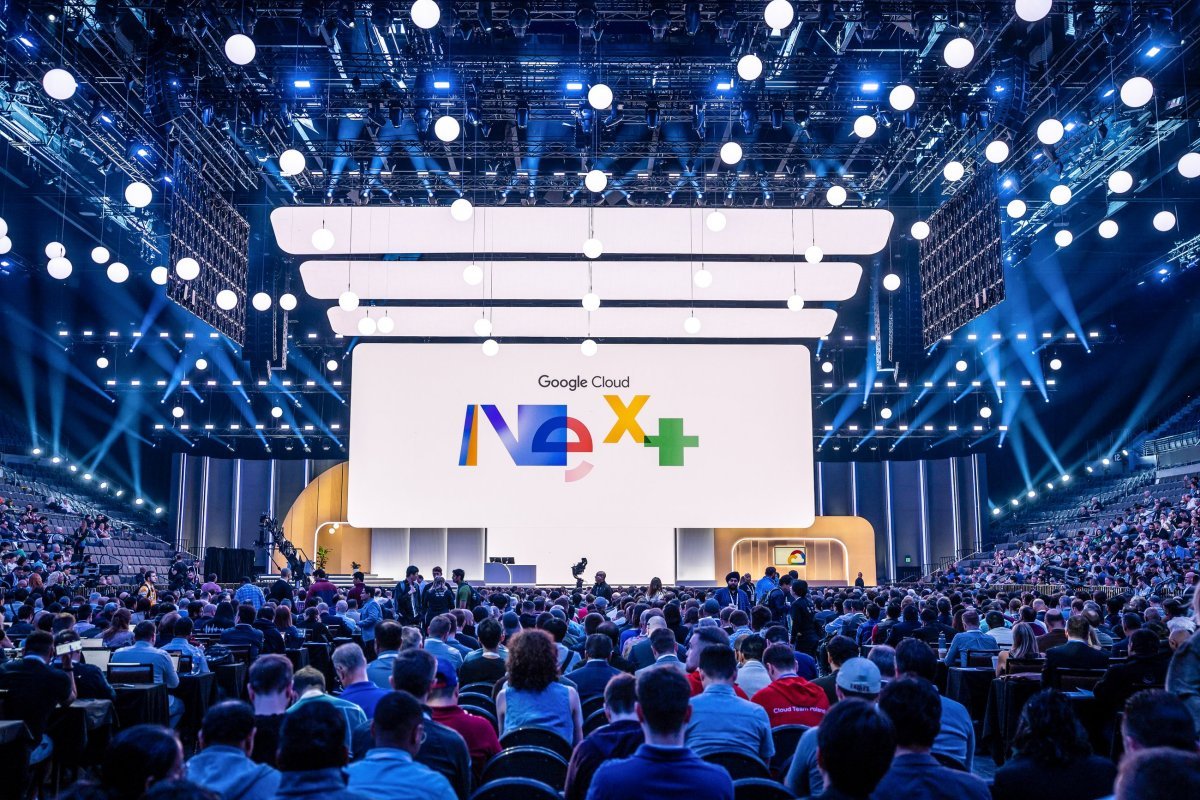
This week in Las Vegas, 30,000 of us got here collectively to listen to the most recent and biggest from Google Cloud. What they heard was all generative AI, on a regular basis. Google Cloud is before everything a cloud infrastructure and platform vendor. If you happen to didn’t know that, you might need missed it within the onslaught of AI information.
To not decrease what Google had on show, however a lot like Salesforce last year at its New York Metropolis touring street present, the corporate failed to offer all however a passing nod to its core enterprise — besides within the context of generative AI, in fact.
Google introduced a slew of AI enhancements designed to assist clients make the most of the Gemini giant language mannequin (LLM) and enhance productiveness throughout the platform. It’s a worthy aim, in fact, and all through the primary keynote on Day 1 and the Developer Keynote the next day, Google peppered the bulletins with a wholesome variety of demos as an instance the ability of those options.
However many appeared just a little too simplistic, even taking into consideration they wanted to be squeezed right into a keynote with a restricted period of time. They relied totally on examples contained in the Google ecosystem, when virtually each firm has a lot of their knowledge in repositories outdoors of Google.
A number of the examples truly felt like they might have been executed with out AI. Throughout an e-commerce demo, for instance, the presenter referred to as the seller to finish an internet transaction. It was designed to indicate off the communications capabilities of a gross sales bot, however in actuality, the step may have been simply accomplished by the client on the web site.
That’s to not say that generative AI doesn’t have some highly effective use instances, whether or not creating code, analyzing a corpus of content material and having the ability to question it, or having the ability to ask questions of the log knowledge to know why a web site went down. What’s extra, the duty and role-based brokers the corporate launched to assist particular person builders, artistic of us, workers and others, have the potential to make the most of generative AI in tangible methods.
However in relation to constructing AI instruments primarily based on Google’s fashions, versus consuming those Google and different distributors are constructing for its clients, I couldn’t assist feeling that they had been glossing over lots of the obstacles that would stand in the way in which of a profitable generative AI implementation. Whereas they tried to make it sound simple, in actuality, it’s an enormous problem to implement any superior know-how inside giant organizations.
Large change ain’t simple
Very similar to different technological leaps during the last 15 years — whether or not cell, cloud, containerization, advertising automation, you title it — it’s been delivered with numerous guarantees of potential features. But these developments every introduce their very own degree of complexity, and huge corporations transfer extra cautiously than we think about. AI seems like a a lot larger raise than Google, or frankly any of the big distributors, is letting on.
What we’ve realized with these earlier know-how shifts is that they arrive with lots of hype and lead to a ton of disillusionment. Even after various years, we’ve seen giant corporations that maybe needs to be making the most of these superior applied sciences nonetheless solely dabbling and even sitting out altogether, years after they’ve been launched.
There are many causes corporations could fail to make the most of technological innovation, together with organizational inertia; a brittle technology stack that makes it exhausting to undertake newer options; or a bunch of company naysayers shutting down even essentially the most well-intentioned initiatives, whether or not authorized, HR, IT or different teams that, for a wide range of causes, together with inner politics, proceed to simply say no to substantive change.
Vineet Jain, CEO at Egnyte, an organization that concentrates on storage, governance and safety, sees two forms of corporations: those who have made a major shift to the cloud already and that may have a better time in relation to adopting generative AI, and people which have been sluggish movers and can seemingly wrestle.
He talks to loads of corporations that also have a majority of their tech on-prem and have an extended solution to go earlier than they begin serious about how AI may help them. “We discuss to many ‘late’ cloud adopters who haven’t began or are very early of their quest for digital transformation,” Jain instructed TechCrunch.
AI may pressure these corporations to assume exhausting about making a run at digital transformation, however they might wrestle ranging from to date behind, he stated. “These corporations might want to remedy these issues first after which devour AI as soon as they’ve a mature knowledge safety and governance mannequin,” he stated.
It was at all times the information
The large distributors like Google make implementing these options sound easy, however like all refined know-how, trying easy on the entrance finish doesn’t essentially imply it’s uncomplicated on the again finish. As I heard usually this week, in relation to the information used to coach Gemini and different giant language fashions, it’s nonetheless a case of “rubbish in, rubbish out,” and that’s much more relevant in relation to generative AI.
It begins with knowledge. If you happen to don’t have your knowledge home so as, it’s going to be very troublesome to get it into form to coach the LLMs in your use case. Kashif Rahamatullah, a Deloitte principal who’s answerable for the Google Cloud observe at his agency, was largely impressed by Google’s bulletins this week, however nonetheless acknowledged that some corporations that lack clear knowledge could have issues implementing generative AI options. “These conversations can begin with an AI dialog, however that shortly turns into: ‘I would like to repair my knowledge, and I have to get it clear, and I have to have it multi function place, or virtually one place, earlier than I begin getting the true profit out of generative AI,” Rahamatullah stated.
From Google’s perspective, the corporate has constructed generative AI instruments to extra simply assist knowledge engineers construct knowledge pipelines to connect with knowledge sources inside and outdoors of the Google ecosystem. “It’s actually meant to hurry up the information engineering groups, by automating most of the very labor-intensive duties concerned in shifting knowledge and getting it prepared for these fashions,” Gerrit Kazmaier, vp and basic supervisor for database, knowledge analytics and Looker at Google, instructed TechCrunch.
That needs to be useful in connecting and cleansing knowledge, particularly in corporations which are additional alongside the digital transformation journey. However for these corporations like those Jain referenced — those who haven’t taken significant steps towards digital transformation — it may current extra difficulties, even with these instruments Google has created.
All of that doesn’t even bear in mind that AI comes with its personal set of challenges past pure implementation, whether or not it’s an app primarily based on an current mannequin, or particularly when making an attempt to construct a customized mannequin, says Andy Thurai, an analyst at Constellation Analysis. “Whereas implementing both resolution, corporations want to consider governance, legal responsibility, safety, privateness, moral and accountable use and compliance of such implementations,” Thurai stated. And none of that’s trivial.
Executives, IT professionals, builders and others who went to GCN this week might need gone in search of what’s coming subsequent from Google Cloud. But when they didn’t go in search of AI, or they’re merely not prepared as a company, they might have come away from Sin Metropolis just a little shell-shocked by Google’s full focus on AI. It could possibly be a very long time earlier than organizations missing digital sophistication can take full benefit of those applied sciences, past the more-packaged options being provided by Google and different distributors.
Trending Merchandise







![Rustic Grey Mason Jar Sconces for Home Decor, Decorative Chic Hanging Wall Decor Mason Jars with LED Strip Lights, 6-Hour Timer, Silk Hydrangea, & Iron Hooks for Home & Kitchen Decorations [Set of 2]](https://m.media-amazon.com/images/I/41DPf4UgGOL._SS300_.jpg)
