

Quite a bit can change in 12 years. Once I first joined TechCrunch in 2012, I used to be the one author it had based mostly out of Asia. For a number of years, it typically felt like I used to be writing to appropriate misperceptions I noticed in my articles’ feedback or on Twitter.
Regardless that Baidu, Alibaba, and Tencent had been innovating quickly, they had been often introduced as copies of Western corporations (“Alibaba, the Amazon of China,” and so forth). Regardless of being dwelling to one-sixth of the world’s inhabitants, India was seen as a homogenous mass. Individuals didn’t even hassle taking note of Southeast Asia outdoors of Singapore.
However I’ve to confess I additionally had misperceptions about markets outdoors of Taiwan, the place I reside, and I used to be actually relieved when different journalists joined TechCrunch’s Asia group to supply on-the-ground experience. For this text, I requested my colleagues on TechCrunch’s Asia group for his or her opinions on how outdoors perceptions of tech in every of their nations have developed. They’re Rita Liao (China), Manish Singh and Jagmeet Singh (India), and Kate Park (South Korea), 4 of the neatest folks I do know. (Notice: Ivan Mehta can also be a sensible author on this group, however his major remit is definitely wanting a lot additional away than Asia.)
Immediately is my final day at TechCrunch. If there’s one factor I hope I’ve achieved in my decade-plus right here, it’s making it clear why Asia’s tech ecosystems matter. They don’t simply affect folks inside their market. They’re influencing the remainder of the world, by means of short-form movies, live-streaming, tremendous apps, fintech, crypto, and rather more. They’ve acquired Western corporations, modified how social media is used, launched attention-grabbing preliminary public choices, and change into essential manufacturing hubs for prime smartphone makers. Ignoring them means you find yourself with a really myopic view of know-how.
Southeast Asia
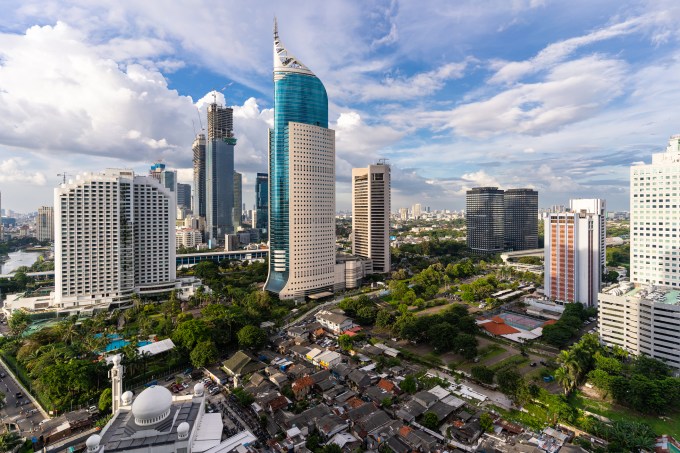
Jakarta, one of many busiest startup hubs in Southeast Asia
I’m going to start out with Southeast Asia, because it’s my major beat. To say that startups there have developed at a wide ranging tempo over the previous decade is an understatement. Regardless of its progress, nonetheless, tech in Southeast Asia remains to be underestimated by many individuals outdoors the area. I’ll give an instance of why that’s unsuitable.
In 2013, I used to be despatched by TechCrunch to the International Entrepreneur Summit in Kuala Lumpur, Malaysia. I met Anthony Tan, who based Seize the 12 months earlier than. At that time, its focus was to make hailing a taxi in Malaysia simpler and safer, with its greater ambition, to evolve into a brilliant app and monetary providers supplier throughout eight Southeast Asian nations — Cambodia, Indonesia, Malaysia, Myanmar, the Philippines, Singapore, Thailand, and Vietnam — was nonetheless nascent.
Then Uber launched in Singapore in 2013. Over the subsequent 12 months, the two companies battled it out with a pricey march into ever extra territories. By 2018, Uber had offered its Southeast Asia enterprise to Seize (SoftBank and Didi, which invested in each, received huge). I bear in mind at the moment studying quite a lot of feedback from outdoors of Asia expressing shock {that a} native startup had “beat Uber.” However as former TechCrunch writer Jon Russell noted in May 2018, “the Seize deal feels someway completely different since, previous to final 12 months, Uber and Seize had been pretty evenly matched.”
I consider that the Uber-Seize deal was the primary time many individuals began to concentrate to Southeast Asia’s startup ecosystem, particularly outdoors of Singapore. Like different locations, SEA is at the moment impacted by the funding downturn — a stark distinction to the increase of 2021 and 2022 when funding happened so quickly my protection may barely sustain (and to be trustworthy, generally I couldn’t).
Startups in Southeast Asia deserve consideration, not simply due to the area’s scale — Indonesia alone is the world’s fourth most populous nation — and its variety; however as a result of they’re creating modern merchandise that may make an affect in lots of different nations.
One in every of my favourite tales for TechCrunch was a feature about shariah-compliant fintech constructed for Muslim customers. These embrace financing for small companies that don’t contain curiosity (which is prohibited by shariah legislation), on-line fee gateways that keep away from non-compliant transactions like purchases of alcohol, tobacco and pork, and saving accounts for pilgrimages to Mecca.
Southeast Asia’s shariah-compliant fintech has a possibility to interrupt into different markets. In line with a report by DinarStandard and fintech Ellipses, the market measurement of Islam fintech within the Organisation of Islamic Cooperation (OIC) nations is predicted to develop at a 17.9% CAGR by 2026, in comparison with conventional fintech’s 13.5% CAGR over the identical interval.
An space I feel the place Southeast Asian startups are glorious total is fintech providers developed for unbanked or underbanked prospects — that’s, individuals who have little to no entry to conventional monetary providers like banking accounts or loans, typically on account of points like an absence of credit score bureau infrastructure, an issue that exists in markets around the globe.
One standout is Kredivo, which has raised about $400 million in equity thus far and is growing a variety of merchandise, together with instantaneous credit score financing for e-commerce and offline purchases, and private loans. It additionally operates a neobank known as Krom. Since a lot of its prospects don’t have a credit score rating, Kredivo, like many different fintech startups focusing on underbanked prospects, has its personal system for measuring creditworthiness, combining information sources like telcos, e-commerce accounts, and financial institution accounts.
The big variety of unbanked and underbanked folks in Southeast Asia additionally helped give rise to a thriving crypto and web3 scene. As Rita reported in 2022, there’s demand for various crypto-related finance to develop within the area. DeFi is doing particularly effectively as a result of it provides customers an opportunity to earn yield and entry to capital with out conventional monetary intermediaries. Every Southeast Asian nation of web3 adoption has its personal taste of crypto innovation. For instance, Vietnam has “hardcore engineers,” whereas Singapore produces SaaS merchandise. One notable startup is Pintu, a crypto buying and selling app that raised funding at a fast clip between 2021 and 2022.
China

Shenzhen’s skyline by Rita Liao
For China, I requested Rita to offer me an outline of the numerous traits she’s seen evolve through the years, particularly ones which have influenced different markets. She’s probably the most insightful journalist I can consider overlaying China tech. Once I began at TechCrunch, China was nonetheless seen by many Western readers as a tech ecosystem stuffed with copycats, particularly of American corporations. For instance, Baidu was also known as “China’s Google” (and I’m embarrassed to say I wrote simply that within the headline of my first article for TechCrunch). That notion has modified dramatically over the previous 10 years.
Much less U.S. venture capital firms are investing in China now, on account of geopolitical and different elements, however they’ve already set traits around the globe, and proceed to take action.
I’ll begin with TikTok since it’s the first social media app from a Chinese language tech firm to succeed in its degree of success in the USA. Developed by ByteDance because the abroad model of Douyin, it launched in 2017 and shortly merged with Musically after ByteDance acquired the latter. The short-form video and live-streaming codecs that it popularized additionally ultimately had been copied as core options on Fb, Instagram, and YouTube. Its success was not precisely characteristic innovation, however extra execution. Rita notes that live-streaming was round earlier than TikTok launched its Reside characteristic in 2019 within the U.S. — YouTube had it in place from 2011 — however TikTok (and Douyin, its Chinese language model) have made it a key characteristic of its vastly common app.
Eight years on, TikTok continues its momentum. A Pew Analysis Heart report recently discovered “comparatively explosive progress” during the last two years, with about a third of people surveyed saying they’d used the platform.
It was additionally, arguably, a sufferer of that success. In 2020, simply 4 years after its launch, the U.S. authorities skilled its eyes on it as a safety menace. It grew to become a political soccer and an epic saga. The battle appeared ultimately to die down — even President Biden’s reelection group joined it — nevertheless it’s not out. Within the final week, the U.S Senate asked Biden’s group to cease utilizing the app. The app stays banned in a number of different nations, like India, and it was lately included amongst social media platforms called to Congress over child safety. Past all of this, although, its affect on web tradition is obvious, and so is its power as a enterprise: it’s expected to overtake Facebook in influencer spending this year.
One other influential app is WeChat, developed by Tencent. The stripped down model out there outdoors of China makes it onerous to see simply how important it’s to the day by day lives of Chinese language customers. WeChat might have began as “simply” a messaging platform, nevertheless it additionally was a key innovator of the “tremendous app” mannequin, with social networking, shopping, games, ride hailing, maps, and movie booking all inside the app. It’s spawned an ecosystem, too, with third-party “mini applications,” or mini apps by third occasion builders, available. Extra importantly, it’s become one in all China’s greatest cell funds suppliers (one thing Jon Russell first covered in 2016), utilized by service suppliers like taxi drivers to just accept funds. You possibly can *most likely* survive in China with out WeChat, however your life could be quite a bit tougher to navigate.
In places like the United States and Europe, corporations like Fb and Telegram have tried to replicate WeChat’s success as a super app. Traction has been uneven, although. The idea has seen probably the most success in nations the place information is dear and downloading one app with a number of providers is extra cost-friendly than a number of apps.
Two different notable examples of how Asia has actually run with the tremendous app idea are Seize and rival Gojek. Each began as ride-hailing apps, however now supply monetary providers, like funds, on-demand supply, and logistics.
One other Chinese language firm having an affect in different markets is PDD, which began as a a lot smaller e-commerce competitor in opposition to giants like Alibaba and JD, earlier than giving rise to social commerce. PDD owns Pinduoduo and its sister app Temu. Pinduoduo allows customers to make group purchases for decrease costs. Which may make it tempting to match it to Groupon, nevertheless it’s completely different in two methods. First, group purchases are initiated by consumers, not sellers. Secondly, it’s targeted on garments, produce and different day by day use objects (in actual fact, PDD has invested heavily in agriculture, as Rita coated). Temu offers inexpensive factory-to-consumer goods.
PDD’s bid to compete with Amazon in the U.S., launched in 2022, has generated quite a lot of downloads due to beneficiant person subsidies, making Temu the most downloaded app in the U.S. last year. It’s making an affect in different methods, too. Final December, my colleague Alex Wilhelm made an argument for why folks ought to take note of the rivalry between PDD and Alibaba. Alex famous that PDD is now value greater than Alibaba, despite the fact that Alibaba remains to be quite a bit greater. This may imply good issues for China’s startup ecosystem.
“Main tech corporations in China have lengthy been important startup buyers, and that position may change into much more essential within the Chinese language tech ecosystem as enterprise capital funding within the nation declines,” Alex wrote. “So if Alibaba and PDD have a number of worth and money, they may assist preserve home startups afloat in the event that they need to.”
India

Skyline view of Bengaluru
When Rita joined TechCrunch, I used to be so relieved to lastly have on-the-ground experience for such an enormous and sophisticated market. I felt the identical method when Manish after which Jagmeet got here onboard to cowl India. I’m not too proud to say I by no means felt geared up to report on India’s tech scene effectively. I’ll offer you one instance why. In September 2013 I wrote an article about how Microsoft’s acquisition of Nokia’s Units & Providers was a wager on rising markets and meant it would unload Nokia’s characteristic cellphone enterprise to give attention to low-cost smartphones as a substitute.
However this text emerged solely after I had drafted one about how Microsoft was planning to double down on characteristic telephones because it dug deeper into markets in India. I despatched it to my editor Ingrid Lunden, and she or he pointed me to analysis exhibiting world gross sales of smartphones had been starting to overhaul characteristic telephones. I needed to rewrite my article as a result of I wrongly assumed that buyers in India had been nonetheless prepared to accept characteristic telephones when smartphones had been taking off in the remainder of the world.
One of many myths Manish dispelled along with his reporting was the misperception that its customers are prepared to sacrifice high quality and expertise for worth. In an article from final September, Manish wrote that despite the fact that Indian customers are historically seen as price-conscious, they’re increasingly demanding premium items. Not solely do they need luxurious smartphones, however additionally they need luxurious lodges, actual property, automobiles, and even followers as consumers pay a premium for aesthetics.
“Indian customers’ willingness to dig deeper into their wallets has main implications for startups working throughout almost each class, permitting companies to enhance their revenue margins with out compromising on high quality,” Manish famous.
One other false impression about India is that the nation is a homogenous mass. As Jagmeet informed me in our Slack messages, India has complicated demographics encompassing completely different age, earnings, and language brackets. So Amazon, Fb, and Walmart all failed after they took a one-sized-fits-all method to India.
Free Fundamentals, a Fb-owned free app that permit folks connect with Fb and different websites like BabyCenter, Wikipedia, and Bing, is an interesting case study. Created to be used in markets all through Africa, South and Southeast Asia, and Latin America, it was meant to extend web adoption amongst “the subsequent billion,” as customers in rising markets had been typically known as. Fb clearly additionally needed to realize extra customers. However in India and plenty of different nations, Free Fundamentals instantly led to backlash for undermining internet neutrality. As Jagmeet informed me, legislators together with Rajeev Chandrasekhar, now the deputy IT prime minister and a member of India’s ruling occasion, led political outrage in opposition to Free Fundamentals. On a elementary degree, Fb additionally underestimated what Indian customers need—entry to the complete web as a substitute of a pre-selected assortment of websites.
One other instance of an American tech big bungling its India strategy was the launch of Android One smartphones in 2014. Designed for affordability, neither its {hardware} or software program may compete with rivals from Indian and Chinese language producers like Xiaomi.
There are some issues in India’s tech ecosystem which might be nonetheless growing, like its growing significance as a producing hub for corporations like Apple, Samsung, and Google. Manish informed me that no person thought India would change into a key {hardware} manufacturing hub a decade in the past. However that has modified on account of elements like a authorities push and incentives, alongside India’s rising financial system.
Manish additionally famous that the Indian inventory market is open to tech startups. Zomato, which was among a crop of tech companies that listed in 2021, is performing effectively, and funding banks like Nomura, Goldman Sachs, Morgan Stanley, and Jefferies are pursuing different Indian startups.
South Korea

A view of Seoul by Kate Park
In 2013, my then-editor in chief requested me to go to SparkLabs’ first Demo Day in South Korea. I sat at dinner with the founders of SparkLabs, which has since grown into a worldwide community of startups accelerators and enterprise capital funds, and listened to them speak about how they needed to offer again to South Korea’s startups after their very own successes as entrepreneurs. South Korea’s startup ecosystem was then fledgling, with chaebols like Samsung, LG, Hyundai, and SK dominating the tech trade.
Since then, the South Korean startup ecosystem has blossomed, due to a mix of personal investments and billions of dollars in government support from businesses just like the Ministry of Science & ICT and the Ministry of SMEs & Startups. Amongst her different insights, Kate informed me that chaebols are getting in on the act with company enterprise capital arms like Samsung Catalyst Fund, devoted to deep-tech, LG Technology Ventures, and Hyundai’s strategic investment fund.
All this capital has borne fruit within the type of unicorns like neobank Toss, e-commerce app Coupang, peer-to-peer marketplace Danggeun, and real estate platform Zigbang. Examples of startups which have gone public include Coupang and game publisher Krafton.
Coupang is very fascinating as a result of only a few years after it was based by Bom Kim in 2010, it had not solely change into the market chief in South Korea, however redefined e-commerce with its ultra-fast deliveries. For instance, if somebody ordered an merchandise by midnight, it will be at their doorstep by 7 A.M. This was due to Coupang’s heavy funding in its logistics community. When it was based, there have been no main third-party logistics suppliers like UPS or FedEx in South Korea. Consequently Coupang needed to construct its personal infrastructure, together with success and logistics facilities. Which means that about 70% of South Korea’s inhabitants now lives within seven miles of a Coupang logistics center.
The corporate is taking a two-pronged method to world enlargement. Over the previous couple of years, it has entered Taiwan and Japan. And in 2023, Coupang acquired Farfetch in a deal value $500 million, giving it a presence in much more markets.
Taiwan

One other lovely day in Taipei by Catherine Shu
I saved Taiwan for the final as a result of I reside right here and it is extremely particular to me. In 2011, James Hill, who labored on the Institute for Info Trade, pitched me about an incubator program whereas I used to be nonetheless on the Taipei Instances. “What the hell is an incubator program,” I assumed. “Is it a rooster factor?” I shortly realized it was not a rooster factor, and wrote about startups for the very first time in this article. Rereading it for the primary time in years jogged my memory I used the phrase “Internet start-up.” Over the subsequent 12 months I continued to cowl Taiwanese Internet start-ups, together with Pinkoi and Hulihealth. In 2012, John Biggs was related with me and requested if I’d be concerned with becoming a member of TechCrunch since they wanted a author in Asia.
Taiwan’s startup ecosystem is near my coronary heart, however typically overshadowed by TSMC and different gamers within the semiconductor trade. However startups proceed to develop and through my time at TechCrunch, it was gratifying to see 4 startups hit unicorn standing after which go public: Appier, Perfect Corp., Gogoro and 91APP. However Taiwanese startups nonetheless want quite a lot of monetary and authorities help of the sort seen in South Korea and Japan, and I hope they get it.
To be clear, the Taiwanese authorities does supply funding. These embrace grants of up to $100 million NTD ($3.2 million USD) for startups which might be lower than 5 years outdated by means of Taiwan’s Nationwide Growth Fund and a whole bunch of other programs. Outgoing President Tsai Ing-wen’s administration additionally applied insurance policies just like the New Southbound Policy for companies that plan to develop to South and Southeast Asia, Australia and New Zealand.
However what startups want is more cash to maintain later-stage progress. That is particularly essential for startups in sectors like deep-tech, that will take years earlier than they’re prepared for commercialization. A recent report by PwC and the Taiwan Institute of Economic Research discovered that almost all, or 77.3%, of funding occurs at angel and seed levels, with relaxation stretched out between growth-stage rounds.
This problem has, after all, been compounded by the funding winter. VCs I talked to mentioned it’s typically troublesome for startups to get funding as soon as they hit Sequence B and past. To make certain, the identical factor is at the moment taking place around the globe, however in Taiwan it’s particularly essential for startups to get long-term help in the event that they need to scale into different markets and put the nation’s startup ecosystem on the map. Monetary help doesn’t simply come within the type of capital. Founders and VCs additionally need to see extra tax subsidies for startups, much like those the federal government applied for the biotech and semiconductor industries. Laws may also be modified to make acquiring overseas funding simpler.
Startups face the query of the place to develop very early on as a result of Taiwan is comparatively small with a inhabitants of 23.6 million folks. During the last decade, I’ve heard quite a lot of completely different goal markets named by founders and buyers. Those most often talked about are Southeast Asia, Japan, and South Korea due to their proximity, so I used to be shocked to see that the PwC named the USA as the highest goal picked by the startups it surveyed.
However that is sensible. Taiwan unicorn Good Corp, which supplies AI and augmented actuality software program for magnificence and trend manufacturers, has grown in the USA, along with different markets. Good Corp. has its personal app, YouCam, that lets customers strive on completely different hair and make-up seems, however its know-how has additionally been utilized by shoppers like magnificence conglomerates Estée Lauder and L’Oréal Paris and built-in into apps like YouTube, Snap, and Google Search.
Like Good Corp., Appier’s tech can also be targeted round AI, which it makes use of to assist corporations with person acquisition methods. The PwC/Taiwan Institute of Financial Analysis discovered that greater than 70% of the startups it surveyed had been engaged on AI tasks. The highest sector they’re focusing on is healthcare. In Taiwan, AI has already been deployed at Taichung’s China Medical University Hospital and Taipei’s National Taiwan University to assist with prognosis.
One supply of hope for startups is President-elect Lai Ching-te’s promise to assist startups by means of strategic investments, loosening rules, and creating 20,000 new startup jobs. However quite a bit remains to be unknown, together with coverage particulars and the way lengthy it can take to move new rules since no occasion holds an absolute majority within the Legislative Yuan. I coated Lai’s potential impact on the startup ecosystem.
***
Wow. Twelve years at TechCrunch. Writing this text means I spent quite a lot of time shifting by means of my outdated posts, revisiting recollections from my time at TechCrunch. It was a visit down reminiscence lane and, in some circumstances, a visit down typo lane. Should you made it with me to the tip of this text, thanks.
I’m grateful to the individuals who have learn my work through the years and the startups and buyers I’ve spoken to for my articles. I hope I’ve carried out my half to assist extra readers perceive why tech in Asia shouldn’t be solely important to comply with, however actually thrilling. Control Asia tech, or else it’s going to sneak up behind you after which do the tech equal of popping a balloon proper subsequent to your ears. For my readers in Chinese language-speaking nations: 謝謝您們這麼用心,認真,持續閱讀我的報導.
Please proceed following Rita, Kate, Jagmeet, Manish and Ivan’s work at their creator pages. It’s been a pleasure, and very humbling, to be thought of their peer. If you wish to get in contact with me, my DMs are open on LinkedIn and X.
Trending Merchandise







![Rustic Grey Mason Jar Sconces for Home Decor, Decorative Chic Hanging Wall Decor Mason Jars with LED Strip Lights, 6-Hour Timer, Silk Hydrangea, & Iron Hooks for Home & Kitchen Decorations [Set of 2]](https://m.media-amazon.com/images/I/41DPf4UgGOL._SS300_.jpg)
