
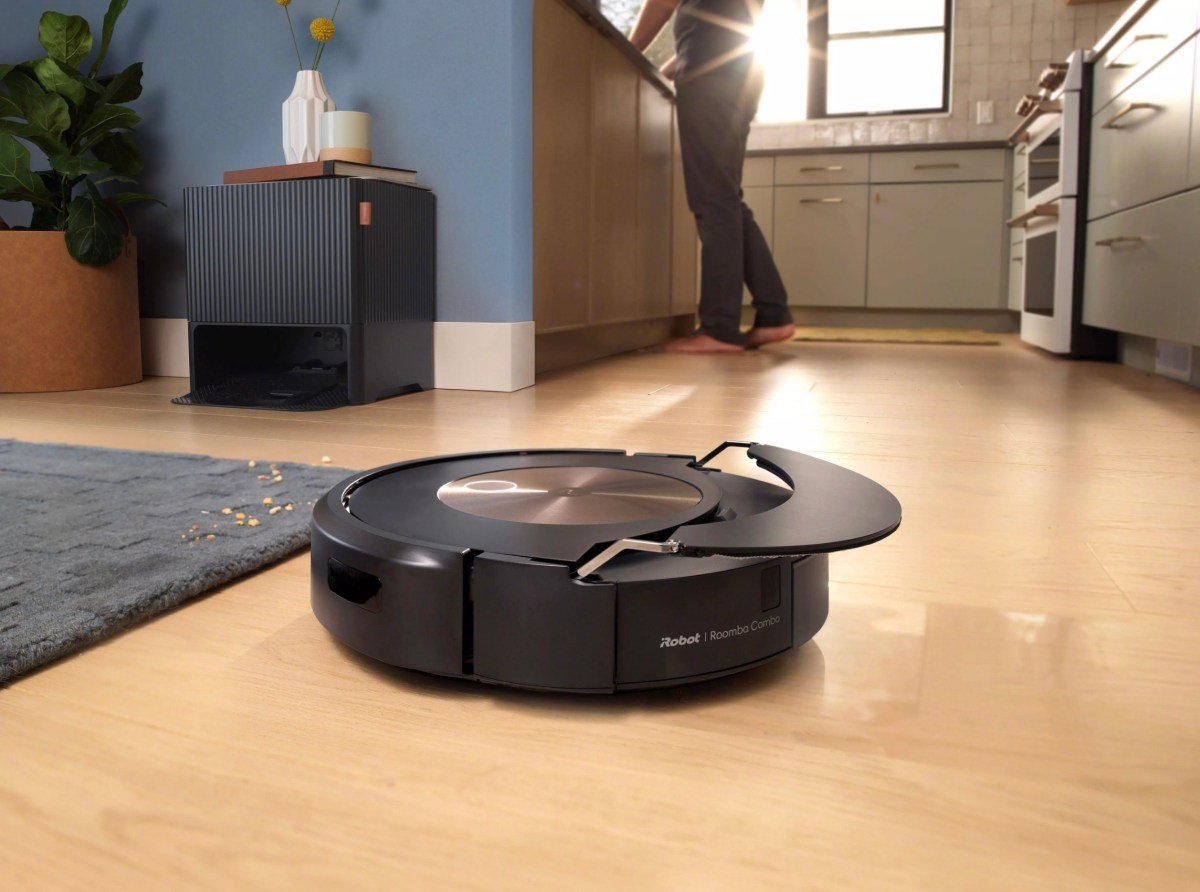
There’s one thing painfully American in regards to the arc of iRobot, the corporate that taught your vacuum to navigate across the furnishings. Based in 1990 in Bedford, Massachusetts by MIT roboticist Rodney Brooks and his former college students Colin Angle and Helen Greiner, the corporate filed for Chapter 11 chapter on Sunday, ending a 35-year run that took it from the desires of AI researchers to your kitchen flooring and, lastly, to the tender mercies of its Chinese language provider.
Brooks, the founding director of MIT’s Pc Science and Synthetic Intelligence Lab and the robotics discipline’s resident provocateur, spent the eighties watching insects and having epiphanies about how easy methods may produce complicated behaviors. By 1990, he’d translated these insights into an organization that will ultimately promote over 50 million robots. The Roomba, launched in 2002, grew to become the uncommon gadget that transcended its class to turn out to be a verb, a meme, and, to the amusement of many, a cat-transportation device.
The cash quickly adopted, with the corporate elevating $38 million altogether, together with from The Carlyle Group, earlier than going public in a 2005 IPO that raised $103.2 million. By 2015, iRobot was flush sufficient to launch its personal enterprise arm, prompting TechCrunch to wryly declare that “robotic domination might have simply taken another step forward.” The plan on the time was to take a position $100,000 to $2 million in as much as 10 seed and Sequence A robotics startups every year. It was the sort of transfer that marks an organization’s arrival, the second while you’re profitable sufficient to fund the subsequent era’s desires.
Then got here what regarded like salvation. In 2022, Amazon agreed to accumulate iRobot for $1.7 billion in what would have been Amazon’s fourth-largest acquisition ever. In a press release saying the information, Angle, who’d been CEO because the firm’s inception, spoke about “creating revolutionary, sensible merchandise” and discovering “a greater place for our group to proceed our mission.” It appeared like a fairy story ending — the scrappy MIT spinoff absorbed into the Every thing Retailer’s sprawling empire.
Besides European regulators had different concepts. Certainly, amid threats they might block the deal — they believed that Amazon may foreclose rivals by proscribing or degrading entry to its market — Amazon and iRobot agreed to kill the deal in January 2024, with Amazon paying a $94 million breakup charge and strolling away. Angle resigned. The corporate’s shares nosedived. It shed 31% of its workforce.
What adopted afterward was a slow-motion collapse. Earnings had been declining since 2021 thanks to provide chain chaos and Chinese language rivals flooding the market with cheaper robotic vacuums. The Carlyle Group, which supplied a $200 million lifeline again in 2023, finally simply extended the inevitable. (It lastly sold that loan final month — presumably at a reduction, although it didn’t say both manner.)
Now it’s over, a minimum of, the model of the corporate that existed beforehand. Shenzhen PICEA Robotics, iRobot’s most important provider and lender, will take management of the reorganized firm. In response to a release issued by iRobot on Sunday, the restructuring plan permits iRobot to stay as a going concern and “proceed working within the strange course with no anticipated disruption to its app performance, buyer packages, international companions, provide chain relationships, or ongoing product help.”
Techcrunch occasion
San Francisco
|
October 13-15, 2026
It additionally vowed to “meet its commitments to workers and make well timed funds in full to distributors and different collectors for quantities owed all through the court-supervised course of.”
What this implies for patrons long term is one other query, one we’ve reached out to iRobot to ask. In its launch, iRobot guarantees to maintain supporting current merchandise throughout restructuring; on the similar time, its authorized disclosures acknowledge the inherent uncertainties of chapter — whether or not suppliers stick round, whether or not the method goes as deliberate, whether or not the corporate survives in any respect.
As The Verge famous in a narrative about iRobot’s struggles last month, even when iRobot ultimately collapses and takes its cloud companies down with it, clients’ Roomba vacuums received’t turn out to be ineffective pucks. The bodily controls ought to maintain working — a Roomba proprietor may nonetheless jab the button to ship it off to hoover or inform it to move dwelling.
What Roomba house owners would lose is all the pieces that make the units really feel futuristic, together with app-based scheduling, the flexibility to inform it which rooms to wash, and voice instructions barked at Alexa whereas sprawled on the sofa.
Trending Merchandise






![Rustic Grey Mason Jar Sconces for Home Decor, Decorative Chic Hanging Wall Decor Mason Jars with LED Strip Lights, 6-Hour Timer, Silk Hydrangea, & Iron Hooks for Home & Kitchen Decorations [Set of 2]](https://m.media-amazon.com/images/I/41DPf4UgGOL._SS300_.jpg)
