
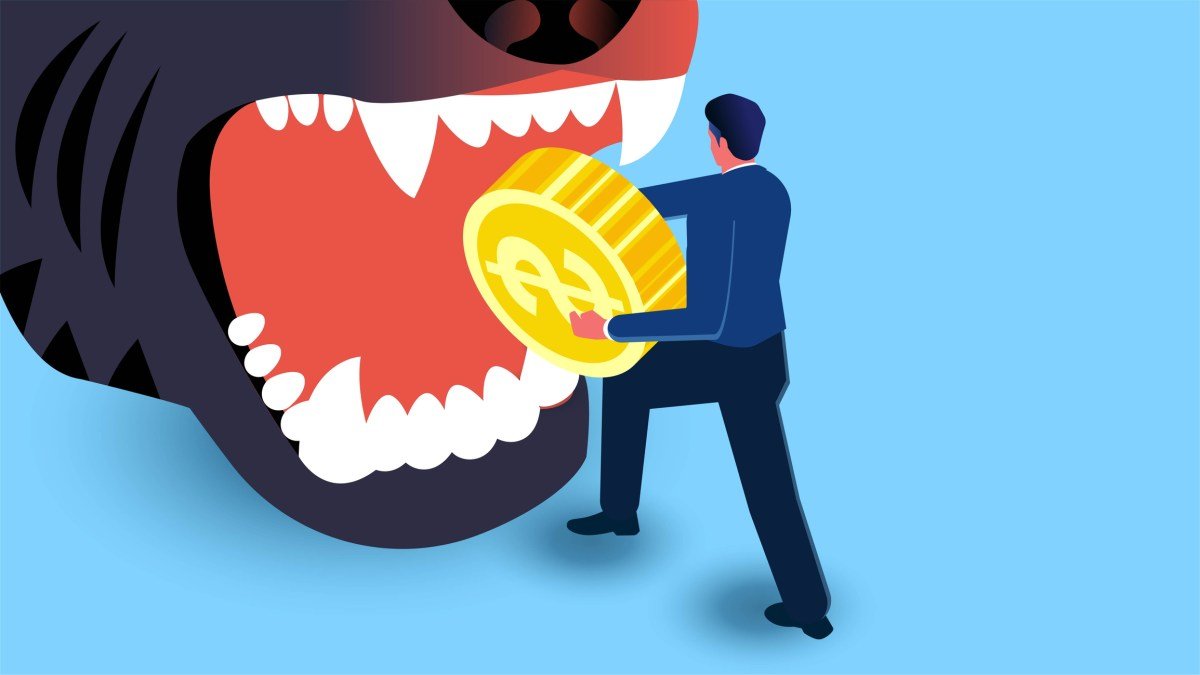
When Nigel Morris tells you he’s anxious in regards to the financial system, you pay attention. As business observers know, Morris co-founded Capital One and pioneered lending to subprime debtors, constructing an empire on understanding precisely how a lot monetary stress the typical American can deal with. Now, as an early investor in Klarna and different buy-now-pay-later corporations like Aplazo in Mexico, he’s watching one thing that makes him deeply uncomfortable.
“To see that individuals are utilizing [BNPL services] to purchase one thing as fundamental and elementary as groceries,” Morris informed me on stage at Web Summit in Lisbon this week, “I believe is a fairly clear indication that lots of people are struggling.”
The statistics again up his unease. Purchase-now-pay-later providers have exploded to 91.5 million customers in the USA, in line with the monetary providers agency Empower, with 25% utilizing the providers to finance their groceries as of earlier this 12 months, in line with survey data launched in late October by lending market Lending Tree.
These aren’t the discretionary purchases — the designer baggage and newest Apple headphones that BNPL was marketed for initially. Debtors aren’t paying it again, both. In response to Lending Tree, default charges are accelerating: 42% of BNPL customers made no less than one late cost in 2025, up from 39% in 2024 and 34% in 2023.
This isn’t only a shopper finance story; it’s a canary within the coal mine for the whole venture-backed fintech ecosystem and past. It factors to what may develop right into a major problem — one which echoes what preceded the 2008 mortgage disaster apart from one factor: it’s largely invisible.
Why’s that? As a result of most BNPL loans aren’t reported to credit score bureaus, creating what regulators name “phantom debt.” Which means different lenders can’t see when somebody has taken out 5 completely different BNPL loans throughout a number of platforms. The credit score system is flying blind.
“In a world the place, if I’m a buy-now-pay-later supplier, and I’m not checking bureau knowledge, I’m not feeding bureau knowledge, I’m oblivious to the truth that Nigel might have taken out 10 of this stuff within the final week,” Morris defined. “[That’s] completely true.”
Techcrunch occasion
San Francisco
|
October 13-15, 2026
Storm clouds on the horizon
The numbers which are out there are each ugly and dated. Shopper Monetary Safety Bureau knowledge printed in January of this 12 months — after the company issued market monitoring orders to main BNPL suppliers together with Affirm, Afterpay, and Klarna — confirmed that roughly 63% of debtors originated a number of simultaneous loans sooner or later in the course of the 12 months, and 33% took out loans from a number of BNPL lenders.
The info additionally revealed that in 2022, one-fifth of shoppers with a credit score report financed no less than one buy with a BNPL mortgage, up from 17.6% in 2021; about 20% of debtors have been heavy customers originating a couple of BNPL mortgage on common every month, a rise from 18% in 2021; and the typical variety of new loans originated per borrower elevated from 8.5 to 9.5.
The borrower profile is as regarding: as of 2022, practically two-thirds had decrease credit score scores, with subprime or deep subprime candidates being authorized 78% of the time.
To be clear, BNPL isn’t but a systemic risk. The full market is measured in a whole lot of billions, not trillions. However the lack of visibility into this debt — mixed with its focus amongst already-stressed debtors — is price watching way more rigorously.
Certainly, on condition that the financial system is worse now than three years in the past for a lot of subprime populations — notably in auto lending — these numbers are doubtless so much larger now.
As for why BNPL knowledge isn’t newer, thank regulatory upheaval. Underneath the Biden administration, the CFPB tried to deal with BNPL transactions like bank card purchases, bringing them beneath Fact in Lending Act protections.
The Trump administration reversed course. In early Could, the CFPB mentioned it could not prioritize enforcement of that rule. Days later, CFPB appearing director Russell T. Vought rescinded 67 interpretive guidelines, coverage statements, and advisory opinions relationship again to 2011, together with the BNPL rule. The company mentioned the laws offered “little profit to shoppers” and positioned a “substantial burden” on regulated entities. (Translation: BNPL corporations lobbied efficiently.)
Actually, quickly after, the CFPB launched a brand new report with a surprisingly different message. Focusing solely on first-time debtors, the company mentioned clients with subprime or no credit score repaid their BNPL loans 98% of the time, and that there was no proof that BNPL entry causes debt stress.
The discrepancy between this rosy image and the 42% late cost fee reveals the info hole on the coronary heart of the issue: We at present don’t have good visibility into what occurs to debtors over time, particularly these juggling a number of BNPL accounts. The optimistic report checked out first-time customers; the regarding knowledge comes from the whole person base.
The state of New York in Could imposed licensing requirements on BNPL corporations to fill the void. However state-by-state regulation creates a patchwork that subtle monetary corporations can simply navigate round.
Requested if he sees parallels between this second and 2008, Morris — who has saved his finger on the heart beat of all issues monetary as a fintech investor for the final 18 years — was cautious to not overstate the comparability.
“So I believe it’s a actual situation,” he mentioned of the financial system, selecting his phrases intentionally. “When you take a half step again and we have a look at the U.S. shopper in the mean time, and we’ve got quite a few companies which are in and round lending to this shopper — up to now, so good. Delinquency will not be rising but. Cost-offs are usually not rising but. However there’s clearly storm clouds on the horizon.”
He pointed to unemployment hitting 4.3%, its highest stage in nearly 4 years. He cited the “tumult round immigration and round tariffs and across the latest authorities shutdown.” Small and medium companies “are very loath to take a position. Individuals have pulled again dramatically within the final 9 months given all that noise.”
Additionally within the combine is the tip of the coed mortgage cost moratorium — “the biggest asset class outdoors of mortgage,” Morris famous. Roughly 5.3 million debtors are in default and one other 4.3 million are in late-stage delinquency, in line with a September Congressional Research Service analysis.
Morris is cautious to notice that the present scenario isn’t but a disaster. “Delinquency will not be rising but. Cost-offs are usually not rising but,” he acknowledged. However the mixture of things — phantom debt, rising unemployment, the tip of scholar mortgage forbearance, and regulatory rollback — creates situations the place issues may speed up rapidly.
The large concern isn’t BNPL debt alone — it’s the cascading results. The Federal Reserve Financial institution of Richmond has warned that BNPL’s potential systemic threat comes from its “spillover effects onto different shopper credit score merchandise.”
Essential to know is that as a result of BNPL loans are sometimes smaller than bank card balances or auto loans, debtors are likely to prioritize maintaining them present, which suggests different, bigger money owed begin to default first. Somebody might need an ideal report on their 4 BNPL accounts whereas their bank card, automobile mortgage, and scholar mortgage all go delinquent.
Shopper lending takes ‘the mother check’
Morris has lived each side of this equation. He revolutionized subprime lending at Capital One. Then he backed fintech startups making an attempt to disrupt the previous guard, together with Klarna, which went public earlier this 12 months and at present boasts a $13.5 billion market cap, despite the fact that it’s barely worthwhile (together with as a result of it absorbs all of the default threat of debtors).
Given these years of insights, I requested him on stage: “The place is the road between catering to and serving to an underbanked inhabitants and enabling folks to dig a gap for themselves? Have these corporations crossed it?”
Morris appeared genuinely to wrestle with the query, telling the investor attendees who’d gathered to be taught from the dialog that it’s a “very, very troublesome query to reply. I believe that the function of the ethical compass in shopper lending may be very, crucial.”
He described “the mother check” from his Capital One days: “If this concept was offered to your mom and he or she known as you up and mentioned, ‘Son, ought to I take this product?’ And for those who can’t unequivocally say, ‘Sure, it’s product,’ you shouldn’t be providing it to the American folks.”
Presumably, Morris wouldn’t put BNPL corporations on this camp given his investments. However maybe the remainder of us ought to, no less than whereas laws — or a scarcity of them — stay what they’re. Take into account that as a result of most BNPL corporations don’t report back to credit score bureaus, it not solely makes visibility into them difficult, but it surely implies that debtors can’t use profitable reimbursement to entry lower-cost credit score.
That’s a part of the enterprise mannequin, by the way in which. “A few of these buy-now-pay-later corporations don’t need that to occur” — which means for his or her clients to construct up their credit score scores — “as a result of they don’t need the patron to graduate,” Morris mentioned.
Whereas Morris and I have been discussing these moral questions, the issue is poised to develop a lot greater, with BNPL bleeding into each nook of the monetary system, and the borders between this unregulated type of lending and conventional banking disappearing solely.
Klarna has been working as a licensed financial institution in Europe since 2017. Affirm now has practically 2 million debit cardholders who can finance purchases in bodily shops, bringing invisible installment debt into brick-and-mortar retail. Each corporations are built-in into Apple Pay and Google Pay, making BNPL as frictionless as tapping your cellphone.
To not be left behind, extra established finance corporations are racing towards BNPL now, too. PayPal mentioned it processed $33 billion in BNPL spending in 2024, rising at 20% yearly. Main banks now let clients break up purchases after the actual fact. By means of offers with cost processors like Adyen, JPMorgan Funds, and Stripe, Klarna’s providers now attain tens of millions of retailers mechanically. What began as a distinct segment checkout possibility is changing into embedded monetary infrastructure.
Morris sees this shift occurring in all places. “After I discuss to a few of these software program corporations that at the moment are embedding funds, lending and insurance coverage,” he informed me, “and also you say, ‘Okay, 5 years from now, the place are you going to make your cash?’” the reply surprises even veteran buyers like him. “They are saying, ‘ what, I believe I’m going to earn more money in embedded finance than I’m in my core software program.’”
Continued Morris: “It begins off as a pleasant little add-on, however when the powers of {the marketplace} drive down the returns within the core enterprise, it’s typically these financing companies which have the best longevity and market energy.”
A second bubble?
The true hazard lies in what’s coming subsequent, which is business-to-business BNPL. The commerce credit score market, the place suppliers lend to corporations shopping for their merchandise, represents $4.9 trillion in payables amongst American companies alone, per knowledge cited by The Economist. That’s 4 instances bigger than the whole U.S. bank card market. And BNPL corporations, having conquered shopper lending, at the moment are transferring aggressively into this house.
When small companies achieve entry to BNPL, their spending will increase by a mean of 40%, in line with B2B BNPL suppliers like Hokodo. It sounds nice for commerce till you notice what it means, which is extra debt, accumulating quicker.
Certainly, the debt itself is being packaged and bought at a tempo that ought to alarm anybody who remembers 2008. Elliott Advisors final 12 months bought Klarna’s $39 billion British loan portfolio. In 2023, KKR agreed to purchase as much as $44 billion in BNPL debt from PayPal. As of June of this 12 months, Affirm had issued round $12 billion in asset-backed securities.
That is the subprime mortgage playbook enjoying out in actual time: slice up dangerous shopper debt, promote it to buyers who imagine they perceive the danger profile, and create layers of monetary engineering that obscure the place the precise publicity lies. Besides this time, lots of that underlying debt isn’t being reported to credit score bureaus.
My very own takeaway from my sit-down with Morris — and my analysis main into it — is that we’re watching two potential bubbles proper now, however just one is getting the eye it deserves, no less than in Silicon Valley, definitely.
The AI bubble has been dominating headlines in latest weeks, as a rising quantity or folks query the $100 billion knowledge facilities, sky-high valuations, and jaw-dropping enterprise rounds we’re seeing.
The BNPL scenario is completely different however no much less price watching. It’s invisible, calmly regulated, and affecting probably the most susceptible People — which is roughly 40% of them. It’s folks financing their meals in 4 installments and up to date graduates juggling scholar mortgage funds with three completely different BNPL accounts.
The champagne is flowing so freely in sure sectors of the financial system that it makes this very large downside simple to miss, however when shopper debt turns into unsustainable, there’s going to be lots of ache throughout the board, and VCs and their venture-backed companies will probably be amongst these to really feel it.
As Morris watches his BNPL investments from the opposite facet of the desk, he appears to know these warning signs higher than most. He’s not predicting a crash — he’s urging vigilance. The query is whether or not regulators will do something about it earlier than it’s too late.
Trending Merchandise






![Rustic Grey Mason Jar Sconces for Home Decor, Decorative Chic Hanging Wall Decor Mason Jars with LED Strip Lights, 6-Hour Timer, Silk Hydrangea, & Iron Hooks for Home & Kitchen Decorations [Set of 2]](https://m.media-amazon.com/images/I/41DPf4UgGOL._SS300_.jpg)
