
Privateness and digital rights advocates are elevating alarms over a legislation that many would count on them to cheer: a federal crackdown on revenge porn and AI-generated deepfakes.
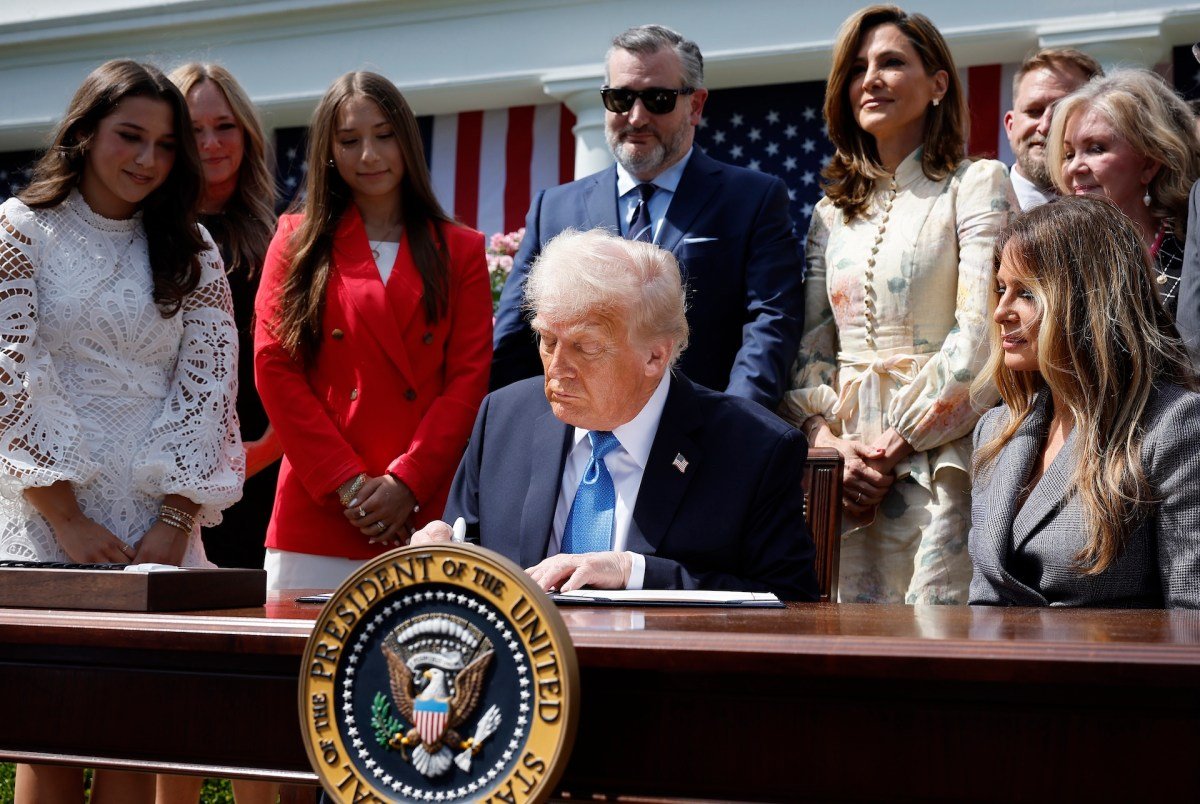
The newly signed Take It Down Act makes it unlawful to publish nonconsensual specific pictures — actual or AI-generated — and offers platforms simply 48 hours to adjust to a sufferer’s takedown request or face legal responsibility. Whereas broadly praised as a long-overdue win for victims, specialists have additionally warned its obscure language, lax requirements for verifying claims, and tight compliance window might pave the way in which for overreach, censorship of respectable content material, and even surveillance.
“Content material moderation at scale is broadly problematic and at all times finally ends up with vital and crucial speech being censored,” India McKinney, director of federal affairs at Digital Frontier Basis, a digital rights group, informed TechCrunch.
On-line platforms have one 12 months to ascertain a course of for eradicating nonconsensual intimate imagery (NCII). Whereas the legislation requires takedown requests come from victims or their representatives, it solely asks for a bodily or digital signature — no photograph ID or different type of verification is required. That possible goals to cut back obstacles for victims, but it surely might create a possibility for abuse.
“I actually need to be flawed about this, however I feel there are going to be extra requests to take down pictures depicting queer and trans folks in relationships, and much more than that, I feel it’s gonna be consensual porn,” McKinney mentioned.
Senator Marsha Blackburn (R-TN), a co-sponsor of the Take It Down Act, additionally sponsored the Kids Online Safety Act which places the onus on platforms to guard youngsters from dangerous content material on-line. Blackburn has mentioned she believes content related to transgender people is dangerous to youngsters. Equally, the Heritage Basis — the conservative suppose tank behind Challenge 2025 — has additionally said that “protecting trans content material away from youngsters is defending youngsters.”
Due to the legal responsibility that platforms face in the event that they don’t take down a picture inside 48 hours of receiving a request, “the default goes to be that they only take it down with out doing any investigation to see if this really is NCII or if it’s one other sort of protected speech, or if it’s even related to the one that’s making the request,” mentioned McKinney.
Snapchat and Meta have each mentioned they’re supportive of the legislation, however neither responded to TechCrunch’s requests for extra details about how they’ll confirm whether or not the individual requesting a takedown is a sufferer.
Mastodon, a decentralized platform that hosts its personal flagship server that others can be a part of, informed TechCrunch it might lean in direction of elimination if it was too troublesome to confirm the sufferer.
Mastodon and different decentralized platforms like Bluesky or Pixelfed could also be particularly weak to the chilling impact of the 48-hour takedown rule. These networks depend on independently operated servers, usually run by nonprofits or people. Beneath the legislation, the FTC can deal with any platform that doesn’t “moderately comply” with takedown calls for as committing an “unfair or misleading act or apply” – even when the host isn’t a business entity.
“That is troubling on its face, however it’s notably so at a second when the chair of the FTC has taken unprecedented steps to politicize the company and has explicitly promised to make use of the facility of the company to punish platforms and companies on an ideological, versus principled, foundation,” the Cyber Civil Rights Initiative, a nonprofit devoted to ending revenge porn, mentioned in a statement.
Proactive monitoring
McKinney predicts that platforms will begin moderating content material earlier than it’s disseminated so that they have fewer problematic posts to take down sooner or later.
Platforms are already utilizing AI to watch for dangerous content material.
Kevin Guo, CEO and co-founder of AI-generated content detection startup Hive, mentioned his firm works with on-line platforms to detect deepfakes and youngster sexual abuse materials (CSAM). A few of Hive’s clients embrace Reddit, Giphy, Vevo, Bluesky, and BeReal.
“We have been really one of many tech corporations that endorsed that invoice,” Guo informed TechCrunch. “It’ll assist clear up some fairly vital issues and compel these platforms to undertake options extra proactively.”
Hive’s mannequin is a software-as-a-service, so the startup doesn’t management how platforms use its product to flag or take away content material. However Guo mentioned many purchasers insert Hive’s API on the level of add to watch earlier than something is shipped out to the group.
A Reddit spokesperson informed TechCrunch the platform makes use of “subtle inside instruments, processes, and groups to deal with and take away” NCII. Reddit additionally companions with nonprofit SWGfl to deploy its StopNCII device, which scans dwell visitors for matches in opposition to a database of identified NCII and removes correct matches. The corporate didn’t share how it might make sure the individual requesting the takedown is the sufferer.
McKinney warns this sort of monitoring might lengthen into encrypted messages sooner or later. Whereas the legislation focuses on public or semi-public dissemination, it additionally requires platforms to “take away and make affordable efforts to forestall the reupload” of nonconsensual intimate pictures. She argues this might incentivize proactive scanning of all content material, even in encrypted areas. The legislation doesn’t embrace any carve outs for end-to-end encrypted messaging companies like WhatsApp, Sign, or iMessage.
Meta, Sign, and Apple haven’t responded to TechCrunch’s request for extra info on their plans for encrypted messaging.
Broader free speech implications
On March 4, Trump delivered a joint tackle to Congress by which he praised the Take It Down Act and mentioned he regarded ahead to signing it into legislation.
“And I’m going to make use of that invoice for myself, too, when you don’t thoughts,” he added. “There’s no one who will get handled worse than I do on-line.”
Whereas the viewers laughed on the remark, not everybody took it as a joke. Trump hasn’t been shy about suppressing or retaliating in opposition to unfavorable speech, whether or not that’s labeling mainstream media shops “enemies of the people,” barring The Associated Press from the Oval Workplace regardless of a courtroom order, or pulling funding from NPR and PBS.
On Thursday, the Trump administration barred Harvard University from accepting overseas scholar admissions, escalating a battle that started after Harvard refused to stick to Trump’s calls for that it make modifications to its curriculum and eradicate DEI-related content material, amongst different issues. In retaliation, Trump has frozen federal funding to Harvard and threatened to revoke the college’s tax-exempt standing.
“At a time once we’re already seeing college boards attempt to ban books and we’re seeing sure politicians be very explicitly in regards to the varieties of content material they don’t need folks to ever see, whether or not it’s vital race principle or abortion info or details about local weather change…it’s deeply uncomfortable for us with our previous work on content material moderation to see members of each events brazenly advocating for content material moderation at this scale,” McKinney mentioned.
Trending Merchandise







![Rustic Grey Mason Jar Sconces for Home Decor, Decorative Chic Hanging Wall Decor Mason Jars with LED Strip Lights, 6-Hour Timer, Silk Hydrangea, & Iron Hooks for Home & Kitchen Decorations [Set of 2]](https://m.media-amazon.com/images/I/41DPf4UgGOL._SS300_.jpg)
